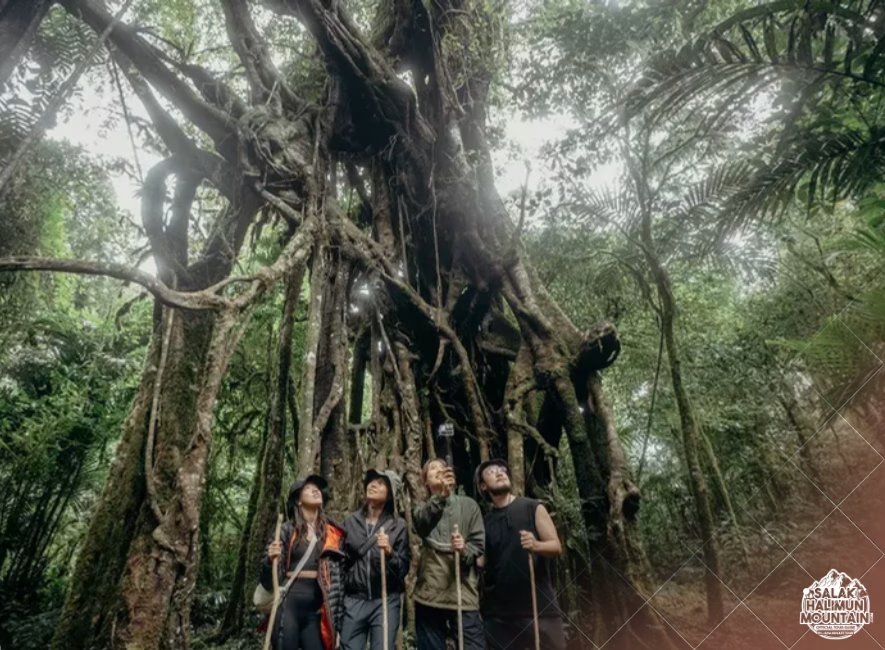
salakhalimunmountain.com – Trekking through the dense rainforest trails of Mount Salak and the expansive wilderness of Halimun often feels like navigating a giant, living obstacle course. As trails climb sharply up slick mud ridges and steep volcanic ravines, the rainforest provides its own natural handrails. Hanging from the high canopy and wrapping around ancient hardwood trunks are thick networks of jungle vines, lianas, and aerial roots. When faced with a vertical muddy step or a slick clay bank, reaching out to grab a hanging vine for support is an almost instinctive reaction for any hiker.
While jungle vines can offer valuable leverage and stability on challenging inclines, treating every vine like a reliable climbing rope is one of the most common mistakes on tropical trails. Not all lianas are rooted firmly in the earth, and many species come equipped with sharp thorns, irritating sap, or hidden decay high above the canopy. Learning the art of using jungle vines for balance on steep trails requires knowing which vines to trust, how to test their strength safely, and how to use them for balance rather than pulling your full body weight up the mountain.
Understanding Rainforest Lianas and Vine Mechanics
To use jungle vegetation safely for balance, it helps to understand how vines grow in tropical ecosystems like Halimun Salak National Park. Lianas are woody climbing plants that rooted in the forest floor and use surrounding trees to lift their leaves into the sunlight. Over decades, some vines grow as thick as a wrist or ankle, twining tightly around massive tree trunks or dropping thick aerial roots directly down from high branches.
However, the anchor point of a vine is rarely visible from the trail floor. A vine that feels stiff and heavy near the ground might actually be attached to a dead, rotting branch fifty feet above your head in the canopy. Pulling hard on an unverified vine can snap the upper deadwood, bringing a heavy, dangerous branch crashing down onto the trail right where you are standing. Understanding that a vine’s stability depends entirely on its canopy anchor is the first rule of jungle safety.
Identifying Thorny and Irritating Vine Species
Before grabbing any vine along the trail, take a close look at its outer bark. The tropical forests of Java are home to several climbing species equipped with natural defense mechanisms. The most notorious of these is the rattan palm, locally known as rotan. Rattan vines grow long, flexible whips covered in sharp, backward-facing thorns designed to hook onto passing animals and surrounding plants.
Grabbing a hidden rattan whip with a bare hand can cause painful cuts and snag your clothing instantly. Other climbing vines produce milky sap or fine plant hairs that can cause skin irritation or rashes upon direct contact. A quick visual check before placing your hand on any hanging stem will protect your skin and keep your climb comfortable.
The Golden Rules of Testing and Using Vines safely
When you encounter a steep, slippery section where a vine appears to offer the best handhold, never commit your weight to it immediately. Local rainforest guides follow a strict testing protocol to ensure a vine is safe to touch and sturdy enough to provide balance assistance before trusting it on a slick slope.
Start by giving the vine a light, gentle tug while looking upward toward the canopy. Watch the branches directly above you to see if anything shifts, creaks, or shakes loose when the vine is moved. If you see falling leaves, dead twigs, or swaying branches, drop the vine immediately and find an alternative handhold. If the canopy stays completely motionless and the vine feels firmly anchored, proceed with a physical weight test.
Testing Wood Fiber Integrity
Even if a vine is securely anchored in the canopy, its lower stem may be suffering from internal rot due to high humidity and fungal growth near the damp forest floor. Test the wood’s structural integrity by giving the vine a quick, sharp downward yank while keeping both feet planted firmly on solid ground.
If the vine feels spongy, bends with a dry cracking sound, or flakes away bark in your hand, it is structurally compromised and will snap under pressure. A reliable vine will feel completely rigid, dense, and slightly springy, offering firm resistance without cracking. Only use vines that pass both the canopy inspection and the sharp pull test.
Biomechanical Balance versus Vertical Pulling
The most important mechanical distinction when using jungle vines on steep climbs is using them for balance assistance rather than vertical traction. A common mistake is grabbing a hanging vine with both hands overhead and trying to haul your full body weight and heavy backpack upward, treating the vine like a gym climbing rope.
Hauling your body weight on a vine places massive strain on the plant’s anchor point, increasing the chance of structural failure. It also relies heavily on your upper body muscles, rapidly fatiguing your arms and forearms. Instead, rely on your legs for vertical propulsion and use the vine merely as a third point of contact to stabilize your center of gravity.
Using a Slide-and-Guide Hand Grip
When ascending a steep muddy slope, hold the vine lightly at chest height with one hand while keeping your feet planted flat on available steps or root ledges. Drive upward using your powerful leg muscles, using your grip on the vine simply to prevent your torso from tipping backward away from the slope.
As you step upward, slide your hand smoothly up the vine rather than letting go completely and reaching wildly for a new hold. Keeping a light, continuous touch on the vine maintains constant feedback about your balance, allowing your stabilizing muscles to react instantly if a mud step gives way beneath your boot.
Safer Natural Alternatives for Trail Stability
While vines can be helpful when tested properly, relying on alternative natural holds or purpose-built gear is often far safer and more predictable on steep rainforest inclines. Halimun Salak National Park offers plenty of reliable trail features that provide secure balance assistance without the risks associated with hanging canopy vines.
Root systems embedded directly in the earth make exceptional, rock-solid handholds and footholds. Large hardwood roots growing across the path are anchored deeply into the mountain face, providing stable ledges that will not give way under body weight. Always opt for a thick, earth-anchored root over a hanging canopy vine whenever both options are available.
Trekking Poles and Hand-on-Thigh Techniques
Carrying a pair of durable trekking poles equipped with rubber tips or mud baskets provides reliable four-point balance on steep jungle trails, eliminating the need to search for hanging vegetation entirely. Planting your poles securely into stable soil or root pockets gives you immediate, dependable support on slick inclines.
If you prefer climbing without poles, master the hand-on-thigh technique. On steep steps, place your hands directly on your lower quadriceps just above your knees as you step upward. Pressing down on your thighs with your hands locks your upper body into a strong mechanical frame, helping your legs drive your body upward without needing to grab surrounding plants or vines.
Preserving the Living Canopy Structure
Using jungle vegetation mindfully is also a crucial part of Leave No Trace principles in protected national parks. Vines and lianas play a vital ecological role in the rainforest canopy. They form natural aerial highways for wildlife, allowing silvery gibbons, palm civets, and tree squirrels to move through the forest without descending to the ground.
Yanking aggressively on hanging vines can tear delicate lianas away from their canopy hosts, destroying wildlife pathways and damaging surrounding tree branches. By treating jungle vegetation with care, testing holds gently, and relying primarily on solid footwork, you protect your own safety while helping preserve the lush, living ecosystem of Mount Salak and Halimun for generations of adventurers to come.
So, if you’re ready to explore the wonders of Mount Salak Halimun, head over to our ONLINE BOOKING PAGE and let’s start planning your adventure. Or simply CLICK THIS LINK to chat with us on WhatsApp.
With our team, you’re not just getting a guide; you’re gaining a local friend who will ensure your trip is nothing short of extraordinary.